

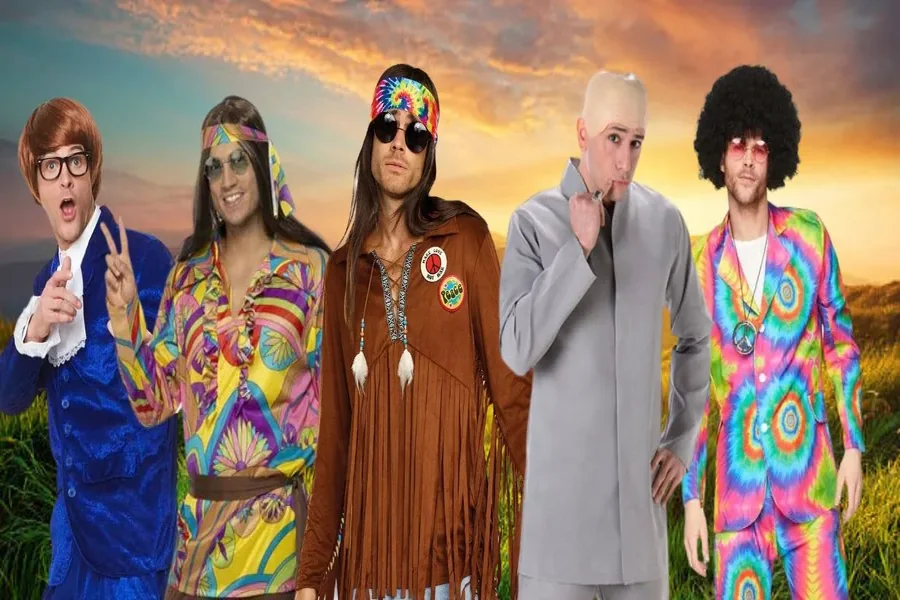
Male Hippie Fashion Overview
The counterculture of the 1960s and 1970s was in the male hippie fashion. It was also focused on liberty, expressing oneself, and comfort. Men wore flowing and loose clothes, which were easy to move about. The colors, patterns, and natural fabrics (bright colors) became a part of the lifestyle. Fashion did not simply mean clothes; it was a protest against conformity. The look was complete with accessories and hairstyles which denoted individuality.
Fashion of Clothes and Designs.
Male hippies wore loosely fitting clothing. Shirts were either long-sleeved or short-sleeved in patterns that were striking like paisley, floral, and tie-dye. Flared trousers and bell-bottom were in style. Denim jeans were used as casual wear. Men adopted piling on of vests, jackets and shawls. Such fabrics as cotton, hemp, and linen were used due to their comfort and natural touch. It was more about the creativity of expression and not about the rules of style.
Footwear and Accessories
Male hippie fashion footwear were plain and comfortable. Wears included sandals and moccasins. Sneakers and leather shoes were also observed basing on the occasion. The accessories were important in achieving the hippie appearance. Necklaces, headbands as well as wide belts were made of beads and leather. Color lenses and round lenses on the sunglasses were fashionable. Hats such as wide-brimmed felt hats were a trend among men who were following bohemian fashion.
Music and Culture Effect.
Male hippie fashion was influenced by music and culture. The emergence of rock and folk music also impacted on the use of clothes. Casual, loose-fitting clothes were a mainstream in festivals such as Woodstock. Artists and bands became fashion heroes to the hippie part of the generation. Fashion statements were taken to be peace icons, floral and handiwork. Clothing was a way of personal ideas, nature fascination, and anti-traditional society.
Hairstyles and Grooming
Male hippie fashion also comprised of hairstyles. The long hair was much adopted among men and women. Natural waves and curls were desired. There were men who had plaited or beads in their hair. Facial hair (mustaches and beards) also became more popular. Grooming was not about perfection but portrayed a carefree natural way of life. The casual wear was supplemented by hair and beard styles.
Final Thought
The hippie fashion among males was a symbol of liberty, innovation, and uniqueness. The era was characterized by loose clothes and colorful patterns, natural fabrics, and unusual accessories. The style was impacted by music, culture and individual beliefs. Modern day bohemian and festival attire still draws on the aspects of hippie fashion today. The insight into this style demonstrates how fashion is able to tell about cultural and social trends and glorify the presence of individuality.
