

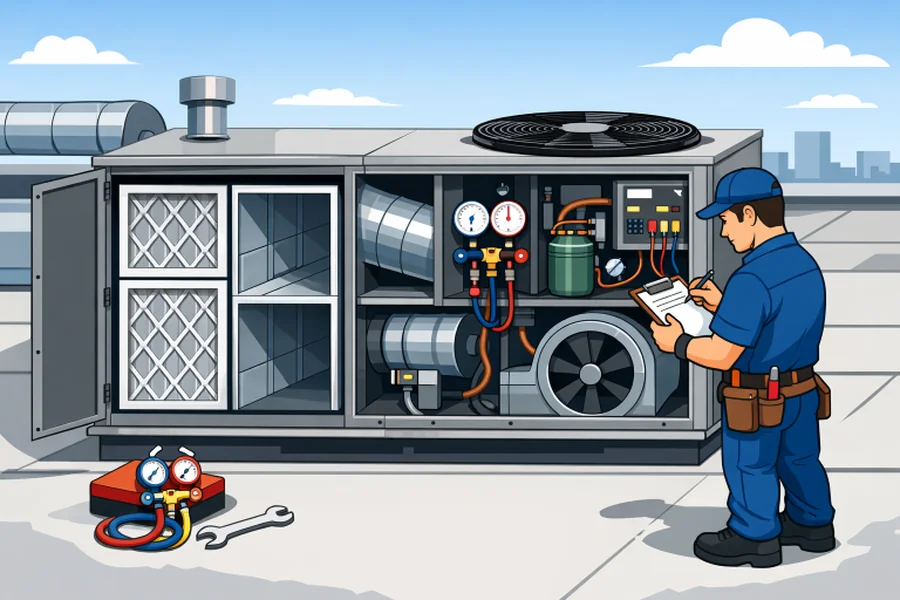
Maintaining your commercial HVAC system is essential for ensuring energy efficiency, reducing operational costs, and extending equipment lifespan. Implementing a proactive maintenance strategy can prevent unexpected breakdowns and promote a comfortable indoor environment for occupants. For expert assistance, consider engaging a professional commercial HVAC service like Diversified Refrigeration. With over 30 years of experience, Diversified Refrigeration specializes in industrial and commercial HVAC solutions, serving Southeastern Pennsylvania and surrounding areas.
Establishing a Preventive Maintenance Schedule
Creating a structured maintenance plan is the foundation of effective HVAC care. Regular inspections and tune-ups can identify potential issues before they escalate, ensuring consistent performance. For most commercial buildings, biannual servicing, once before the cooling season and once before the heating season, is recommended. High-usage facilities may require more frequent checks.
It’s also important to maintain a detailed maintenance log. This log should include the dates of service, a description of the work performed, the parts replaced, and notes on any issues found. Over time, this record-keeping can reveal patterns that help predict when major maintenance might be needed, allowing facilities managers to plan and budget accordingly.
Regular Filter Replacement
Dirty filters restrict airflow, causing the system to work harder and consume more energy. It’s advisable to check filters monthly and replace them every 30 to 90 days, depending on usage and environmental factors. This simple practice can significantly improve air quality and system efficiency.
The frequency of filter changes can also depend on the specific environment in which your commercial HVAC system operates. For instance, facilities with high dust or particle levels, such as warehouses or manufacturing plants, may need even more frequent changes to maintain optimal airflow. Improved air quality from regular filter maintenance can positively impact employee productivity and reduce the spread of airborne illnesses.
Cleaning Coils and Ductwork
Over time, coils and ductwork accumulate dirt and debris, hindering heat exchange and airflow. Annual cleaning of evaporator and condenser coils, along with duct inspections, can restore up to 46% of airflow capacity, enhancing overall system performance.
A thorough cleaning not only improves efficiency but also helps prevent common HVAC issues such as system icing, mold growth, and musty odors. It’s a best practice to schedule cleanings during off-peak hours to minimize disruption to occupants and operations. Professional duct cleaning services often use advanced tools, such as rotary brushes and powerful vacuums, to ensure comprehensive results.
Monitoring Refrigerant Levels
Proper refrigerant levels are essential for efficient cooling. Low levels can lead to increased energy consumption and potential compressor damage. Regular checks and prompt repairs of any leaks ensure optimal operation.
In addition to periodic assessments, it’s beneficial to invest in leak detection systems. These systems provide early warnings if refrigerant escapes, allowing you to act quickly before expensive compressor damage or environmental release occurs. Using certified technicians for refrigerant management is also crucial due to strict environmental regulations surrounding refrigerant handling and disposal.
Calibrating Thermostats and Controls
Inaccurate thermostat readings can cause unnecessary system cycling, leading to energy waste. Annual calibration of thermostats and control systems ensures accurate temperature regulation and energy efficiency.
It’s advisable to check all programmable settings for alignment with occupancy schedules. Modern smart thermostats offer advanced scheduling and remote control, allowing for even greater fine-tuning of comfort without manual adjustment. Regular staff training on how to use smart controls can further reduce setpoint drift and inefficiency.
Inspecting and Sealing Ductwork
Leaky ducts can result in significant energy loss. Annual inspections and sealing of ductwork can prevent up to 30% of conditioned air from escaping, thereby reducing energy costs and improving system efficiency.
Technicians use specialized duct sealants and tapes approved for HVAC applications, as standard materials can degrade rapidly inside duct systems. Along with sealing, insulation upgrades for exposed ductwork in unconditioned spaces should be considered to minimize thermal losses and maximize comfort.
Leveraging Smart Technologies
Integrating smart thermostats and building management systems allows for real-time monitoring and adjustments, optimizing performance based on occupancy and usage patterns. These technologies can lead to substantial energy savings and enhanced comfort.
Additional features such as predictive maintenance alerts, trend data analytics, and integration with other building automation systems provide proactive solutions to potential issues. Not only do these systems optimize HVAC performance, but they also simplify compliance reporting and support sustainability goals with detailed usage data.
Adhering to Industry Standards
Compliance with standards such as ASHRAE Standard 180 ensures that maintenance practices meet industry benchmarks, promoting safety and efficiency. Implementing a documented maintenance program aligned with these standards is not only beneficial but often a code requirement.
Regular training through industry associations can keep your maintenance staff up to date on evolving standards and best practices. Investing in certification programs for key team members strengthens your compliance and builds industry credibility.
Employee Training and Awareness
Facility staff play an important role in HVAC maintenance. Providing regular training sessions on recognizing early warning signs of equipment failure, such as abnormal noises, increased humidity, or uneven temperatures, can lead to faster problem resolution. Training should also cover basic HVAC operation procedures, emergency protocols, and optimal equipment use to prevent unnecessary wear on the system.
Planning Upgrades and Replacements
As part of proactive maintenance, it’s wise to assess your system’s age and performance regularly. Older systems may become less efficient over time, even with proper care. Planning for scheduled upgrades, such as transitioning to energy-efficient HVAC units with advanced features, can provide long-term cost savings and improve indoor air quality. Evaluating new technologies such as variable-speed drives, energy-recovery ventilators, and environmentally friendly refrigerants may further enhance building sustainability and resilience.
Documenting and Tracking Performance
Maintaining comprehensive records of all maintenance activities, performance checks, repairs, and upgrades helps you monitor long-term system health. Use a digital maintenance management system to track metrics such as energy consumption, repair frequency, and work order completion rates. This data-driven approach enables data-backed decisions and supports capital budgeting, warranty claims, and compliance audits.
By following these best practices, businesses can ensure their commercial HVAC systems operate efficiently, providing a comfortable environment for occupants while optimizing energy usage and reducing operational costs. For tailored solutions and professional support, partnering with an experienced commercial HVAC service provider ensures peace of mind and peak system performance year-round.
