

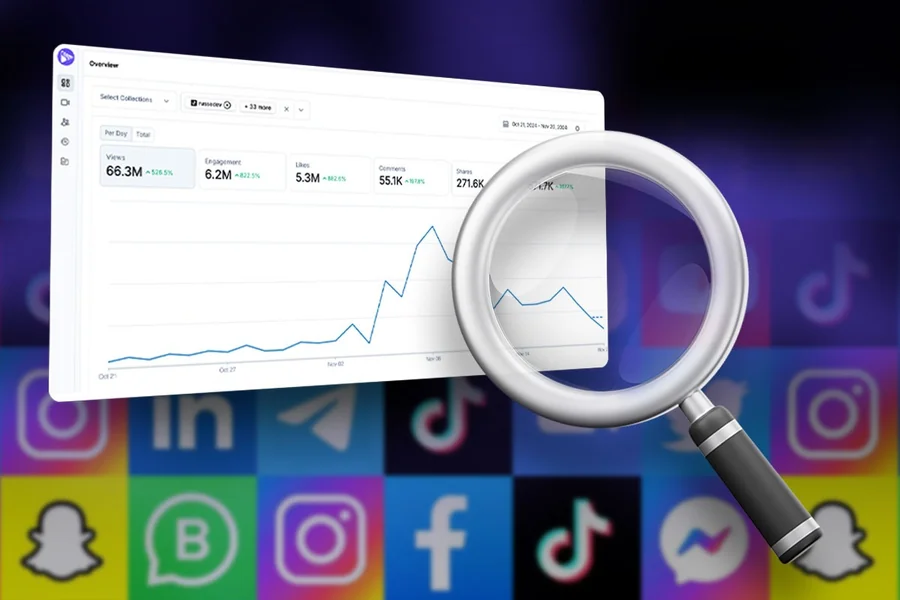
What’s social media monitoring?
Social media monitoring, means keeping tabs on what people say about your business online. You’re seeing what customers, rivals, and the people you want to reach are doing on social media. It’s about staying in the loop with talks about your brand, what you sell, or the industry you’re in.
It’s not just casual looking around. It’s a planned way to find mentions, chats, and popular things linked to keywords, brand names, hashtags, or subjects. This info helps with sales, marketing, customer help, and even fresh product ideas. You can spot trends, change campaigns, figure out what customers need, and fix reputation problems before they get too big.
One of the best things about social media monitoring is finding stuff early. If you catch bad comments fast, you can fix problems and keep them from getting worse. Also, you can watch rivals and react to changes in the market.
Unlike a one-time analysis, monitoring is continuous. The insights you gather feed into your broader social media management strategy, helping with reporting, decision-making, and long-term planning.
Importance of social media monitoring
- Make Your Brand Stand Out
It’s tough out there. There are tons of brands all fighting for people’s attention. Media monitoring is great because you figure out what folks really think about you. Do they even know you exist? Do they get what you’re all about? If you watch what’s being said, you can catch any confusion early and fix it.
Plus, media monitoring shows you where your messages might be weak. You can see if your brand sounds the same on your blog, in the news, and on social media. When everything lines up, it’s way easier to connect with the people you want to reach.
- Keep Your Reputation Solid and Handle Problems Fast
A media monitoring service lets you keep tabs on what people are saying about your company. You can tell if it’s generally good or bad. Speed is key, especially on social media. Opinions can spread like crazy in minutes, whether they’re good or bad.
Monitoring tools tell you ASAP when your brand gets mentioned in the news or online. You can thank people for good feedback, answer questions, fix problems, and deal with unhappy customers right away. Quick replies show you care and stop bad feelings from getting worse. You can even set up alerts for words that might mean a crisis is coming.
- Work with the Right People to Help Your Brand
Industry experts, bloggers, and influencers have a strong sway over their followers. Partnering with the right people can boost trust, awareness, and sales. Social media monitoring helps identify these key figures. By tracking who influences your niche, a social media management tool like Sprinklr Social can streamline outreach and help you engage with the most relevant collaborators.
- Know Your Industry and Your Competition
Media monitoring is a good way to stay in the loop. You can spot new trends, see what’s changing, and get ready for more demand. If you know what’s coming, you can change your plans early and jump on chances when they appear.
You can also watch what your rivals are doing. If you check out their strategies, you can figure out what works, what doesn’t, and how they get seen. You can look at how they show themselves in the media, how their partners get noticed, and where you stand compared to them. This helps you set goals that make sense, not make the same mistakes, and get better where they’re doing better.
- See How Well Your Communication is Working
Media monitoring is a useful thing for checking and improving your conversations with the public. It shows how much media coverage your campaigns get, if you’re talking to the right people, and if your message is getting through. The info you get helps you make better choices.
One of the best things is how easy it is. Monitoring programs do the time-consuming stuff for you. They collect mentions, look at data, and send reports right to your inbox. This saves you time and lets you focus on plans for the future. The information and reports also help you prove to your boss that your PR and communication work is worth it by showing clear results.
- Get Ideas for New Stuff
Everyone in marketing knows it can be hard to constantly think of new content ideas. It’s easy to hit a wall and wonder what to write about.
Media monitoring keeps ideas coming. By watching industry talks, you can see what’s getting hot and what people care about. If you already have a topic, monitoring related words can show you unexpected new ideas. You can also check what your rivals are doing with their content. You can use their good ideas for inspiration and avoid their less successful ones.
Making social media monitoring work
To protect and improve your brand with social media monitoring, you need a plan. Don’t just track numbers – dig into the info for insights.
Setting Goals
Start with clear goals. Do you want to improve customer service, increase brand awareness, or manage your brand’s image?
If your goal is better customer service, focus on finding complaints quickly so you can fix things fast.
Picking the Right Metrics
Choosing the right metrics helps you reach your goals. Common metrics include mentions, sentiment, engagement, and influence.
If you want to make your brand look better, sentiment analysis is important because it shows how people feel about your brand over time.
Finding Keywords and Hashtags
Keywords and hashtags are important for social media monitoring. List brand names, product names, campaign hashtags, competitor names, and industry terms.
Tracking keywords helps you catch chats, spot trends, and respond to things that affect your brand.
Making a Schedule
Be consistent. Depending on your industry, you might need to monitor in real time, daily, or weekly. Fast-moving industries usually need constant monitoring.
Your schedule should match audience expectations.
Privacy and Ethics
Monitor responsibly. Follow data protection rules like GDPR and CCPA. This means being open about your data use and keeping it safe.
Respecting privacy builds trust.
Making Your Responses Real
How you respond shapes perceptions of your brand. Be empathetic, honest, and personal. A human touch can turn a reply into a conversation.
Avoid canned responses. Personal attention shows you care and improves customer loyalty.
In conclusion
Keeping an eye on social media lets you get to know your audience, take care of your brand’s image, and keep up with everyone else. If you do it well, you can use what you see on social media to make smart choices.
To do it right, set some targets, watch the right stuff, look for keywords, post often, be cool about privacy, and just be yourself. This helps you make friends and keep your reputation safe.
