

Have you ever felt like you’ve experienced a situation before but just couldn’t put your finger on it?
For instance, you’re vacationing in a far-off destination when you suddenly reach a place that looks eerily familiar. Or, you stumble into someone for the first time, but can bet your bottom dollar that you’ve met them before.
Well, you’re not alone. Many people have been there.
But when these experiences are traumatic in nature and keep recurring so vividly that they threaten to alter your personality, then you could be suffering from a problem known as false memory syndrome (FMS).
FMS is more common than most people imagine. And while it’s easy to dismiss victims as purely delusional or attention-seeking, the condition can gradually disrupt an individual’s life and relationships.
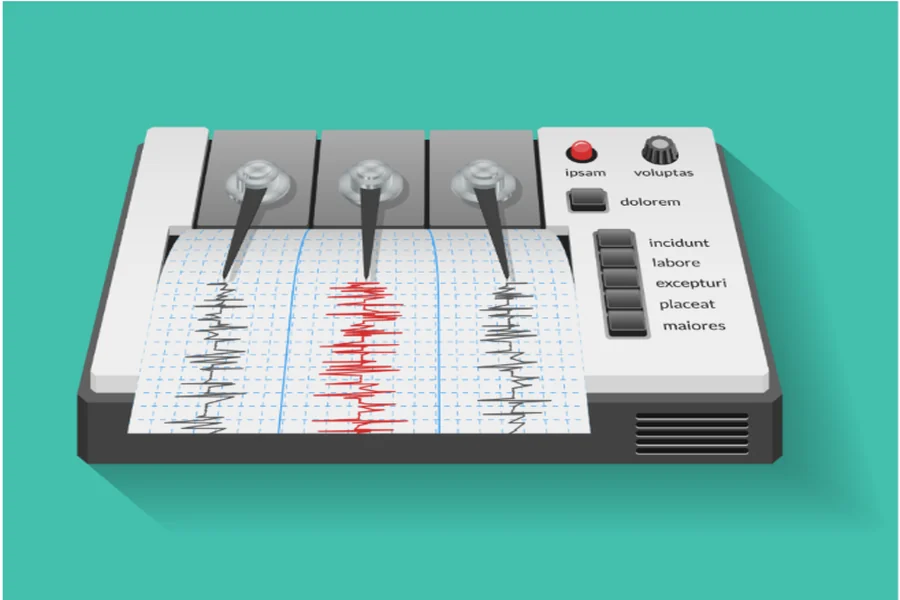
Recently, polygraph experts have begun to explore the role of false memory syndrome in lie detector tests. Which begs the question – can FMS impact the credibility of polygraph exams?
Unpacking False Memory Syndrome
False memory syndrome is a pseudo-psychiatric disorder centered on the belief of having experienced certain traumatic events. People with FMS believe so firmly in their delusions that it affects their identity, personality, and social relationships.
Polygraphs are premised on the theory that deception arouses the autonomic nervous system (ANS), altering various physiological parameters. Commonly targeted functions include heart rate, blood pressure, respiration, and perspiration.
To conduct a credible polygraph test, examiners must compare a subject’s response to Relevant and Control questions against their normal physiological state. Significant deviations from prerecorded baselines indicate deception.
But since people with false memories aren’t consciously lying, many pundits are starting to wonder if it’s possible to polygraph such individuals.

What Causes FMS?
FMS often results from repeating a false or exaggerated narrative several times. The condition may also result from merging personal accounts with similar witness statements.
For instance, witnessing extraordinary violence may cause you to believe you were the actual victim. By replaying these experiences long enough, the brain can fill in the details and lead to a fabricated version of events.
It’s also worth noting that memories aren’t recordings of past events, but rather reconstructions. That makes them remarkably easy to manipulate.
False Memory and Polygraph Testing
Lying stimulates the autonomic nervous system, particularly via its Sympathetic Nervous System (SNS).
Note that the brain is naturally wired to tell the truth rather than engage in deception. When you intentionally spin a falsehood, you exert undue stress on the brain’s frontal lobe and limbic system. This cues your ANS to trigger certain physiological responses to cover the lie.
Heart rate and blood pressure spike as the body draws up more oxygen. The skin’s sweat glands also go into overdrive, increasing perspiration and skin conductivity. Meanwhile, breathing becomes shallower and more restricted.
However, these physiological changes only occur in people who know they’re lying. As individuals with confabulated memories believe their accounts of events to be factual, they may not experience the physiological stress associated with deception. This could lead to false negatives.
Whether you’re polygraphing a victim or witness, findings from lie detector tests can have far-reaching implications. Examiners must implement the industry’s best practices to minimize false positives and false negatives. But how?

Tips for Polygraphing False Memory Subjects
Capitalizing on the Pre-test Phase
Polygraph tests typically begin from a pre-test phase, during which examiners build rapport with examinees and prepare them for the procedure.
The pre-test phase isn’t entirely a Q&A session. Therefore, examiners may make general inquiries about the examinee’s background.
Pre-test conversations can offer reliable hints of false memory, such as unusually vivid narrations and a compelling desire for persuasion.
Examiners would then determine if the examinee can undergo a polygraph test. If yes, they must design in-test questions in view of the subject’s psychological state.
Designing Robust Control Questions
Control questions are designed to bring up past offenses or misconducts, typically those less severe than the matter under investigation. They often elicit more dramatic responses in truthful subjects.
Control questions inject a different perspective into the interview, introducing aspects that FMS examinees aren’t motivated to lie about.
Assume that a subject is spinning a yarn regarding a heinous murder they recently witnessed. For the examinee, the focus is on that specific incident. Asking if they’ve ever been accused of threatening others with violence will throw them off balance if they’ve, indeed, had such allegations leveled against them.
Besides, asking flat-out Control questions like ‘did you answer these questions from a third-person viewpoint’ may knock the subject back to reality.
Looking For Visual Cues
Besides comparing Control and Relevant questions, examiners can also rely on nonverbal cues while interpreting polygraph results.
Analyzing visual signs, alongside responses to in-test questions, may help unmask well-concealed deception.
Ideally, polygraphers would video the entire session. They then analyze video footage during the post-test phase, paying keen attention to red flags like low doubt tags.
Mitigating the Impact of False Memories
False memory syndrome is one of the most challenging disorders, due to its ability to assume the place of real memories.
People with FMS aren’t intentionally being deceptive. Rather, they firmly believe in their alleged experiences and won’t be persuaded otherwise.
As their consciences aren’t conflicted, FMS examinees won’t experience the cognitive load that deception exerts on normal people. This could lead to false negatives during polygraph tests.
Before polygraphing FMS subjects, it’s prudent to engage them in rigorous cognitive interviews. This enables examiners to identify clues of false memory and how they relate to the matter under investigation, before prequalifying the examinee for a lie detector test. Besides, the feedback can help design polygraph questions accordingly.
