

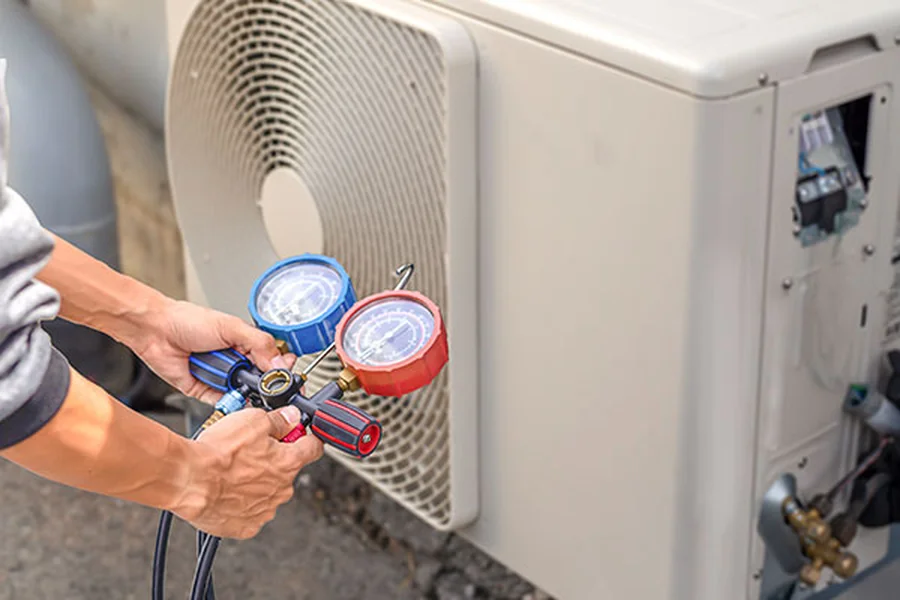
Refrigerant plays a central role in how an air conditioning system removes heat from indoor air and releases it outside. When the refrigerant level stays where it should be, the system can cycle heat efficiently and maintain a stable indoor temperature. When a leak develops, that balance starts to fail in ways that often seem gradual at first. A home may feel warmer, cooling cycles may last longer, and monthly energy use may begin to rise without an obvious explanation. Understanding how refrigerant leaks affect efficiency helps explain why even a small loss can lead to greater comfort and performance problems over time.
How leaks reduce performance
-
Lower Refrigerant Levels Weaken Heat Absorption
A refrigerant leak reduces the amount of heat the system can absorb and transfer during each cooling cycle. Air conditioning relies on a closed-loop process in which a refrigerant circulates through coils, changing pressure and temperature as it carries indoor heat outside. When part of that charge escapes, the system can no longer perform that transfer as effectively as designed. The air moving across the evaporator coil may still feel somewhat cool, but it often does not lose enough heat before returning to the rooms. That means the thermostat remains unsatisfied longer, so the air conditioner keeps running while delivering less actual cooling. The problem is not simply that the unit works more slowly. It is that the system loses its ability to move heat at the rate required for steady comfort. In many homes, this creates an early pattern of longer runtimes, uneven room temperatures, and indoor humidity that feels heavier than usual. A homeowner searching for Heating and Cooling Services may first notice that the AC seems active all day, yet the house still feels warmer than it should.
-
Longer Cycles Increase Energy Use and System Strain
As refrigerant levels drop, the air conditioner usually has to run much longer to produce the same amount of cooling that it once delivered in a shorter cycle. That extra runtime affects efficiency because the system consumes more electricity while achieving a weaker result. Instead of reaching the set temperature within the normal time, it may stay on for extended periods, especially during hotter afternoons when the unit’s demand is already high. These long cycles can create a false impression that the system is still operating normally, just under more seasonal pressure. Still, the real issue is that the cooling capacity has been reduced within the sealed circuit. The compressor, in particular, can face greater strain because it must continue to support a system that is no longer balanced. Over time, this constant stress can contribute to wear that affects other components as well. The result is not only higher utility bills but also a system that becomes less dependable as it works harder without the proper refrigerant charge required for stable, efficient cooling.
-
Coil Freezing and Airflow Problems Make Efficiency Worse
Refrigerant leaks can also trigger secondary problems that further reduce efficiency. One of the most common is coil freezing. When refrigerant pressure drops too low, the evaporator coil can become excessively cold, allowing moisture in the air to freeze on its surface. Once ice begins to form, airflow across the coil is restricted, further reducing cooling output. At that stage, the system is no longer just low on refrigerant. It is now also struggling with blocked airflow and reduced heat exchange. Homeowners may notice weak airflow from the vents, reduced cooling throughout the house, or a pattern in which the system starts normally but performs worse over time. Because the blower may still be running, the issue can be confusing. The AC sounds active, yet the comfort level keeps slipping. Ice buildup can eventually force the unit into a cycle of poor performance that does not improve until the leak is repaired, the charge is corrected, and the frozen components fully recover.
Why Prompt Attention Protects Efficiency
Refrigerant leaks affect air conditioning efficiency by reducing heat transfer, extending cooling cycles, increasing energy consumption, and placing additional stress on critical components. They can also lead to frozen coils and airflow restrictions that make the system perform even worse. What begins as a hidden loss within the refrigerant circuit can grow into a broader comfort and reliability problem if left unaddressed. Paying attention to longer runtimes, weaker cooling, rising bills, or ice on the indoor unit can help reveal the issue before more damage develops. Addressing the leak early supports steadier cooling, lower operating strain, and a system that performs closer to the way it was intended to run.
