

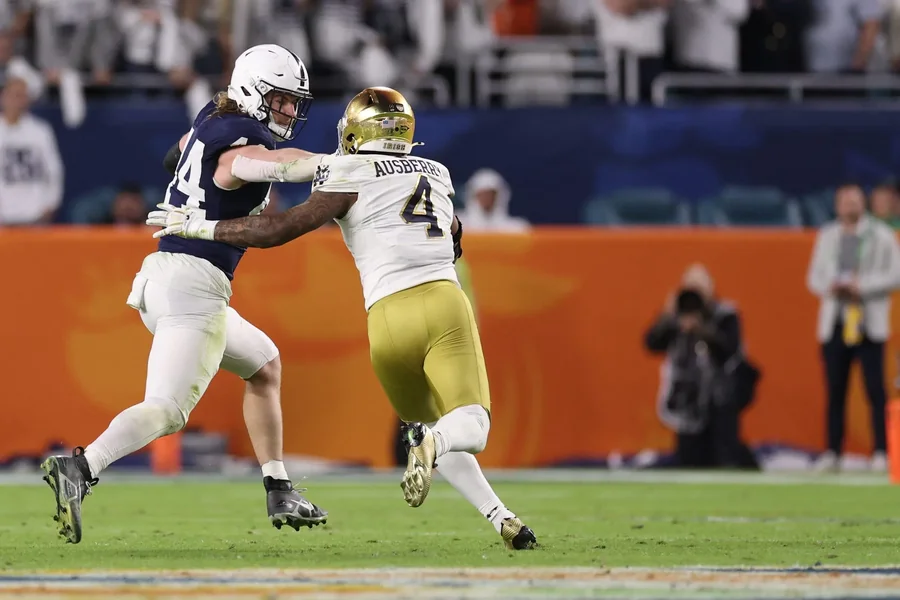
The pass interference penalty in football at college is an important rule. It occurs where a player block an opponent unlawfully when he or she is receiving a forward pass. This punishment is imposed on offensive and defensive players. The aim is to bring about fairness and integrate the integrity of the game. Knowing the rules makes players, coaches, and fans in the game play the game correctly.
Defensive Pass Interference.
Pass interference happens when the receiver is hit by a defender illegally before receiving the ball. Interference, such as pushing, grabbing, or holding a receiver is regarded as such. The defenders are unable to hinder or obstruct the way of the receiver to the ball. The offense is given a penalty in case it is called. Normally, it leads to the ball being given at the position of the foul and with an automatic first down.
Pass Interference (Offensive Type).
The offensive pass interference occurs when an offensive player blocks or pushes a defender illegally to give him advantage. This may involve bumping off a defender as one attempts to receive a pass. The punishment normally translates to a loss in yardage of the crime. Referees observe every unfair advantage that has been obtained at the time of play. Offensive interference calls can be avoided by good technique and positioning.
Spotting and Enforcement
The fine is imposed at the point of the foul. In defensive pass interference, the ball is placed where it was interfered with resulting in the offense with a first down. In offensive interference, the squadron loses the ground gained on the last line of scrimmage. Officials exercise their discretion to find out whether contact interfered with play. It is necessary to spot the foul correctly and ensure that the game is fair.
Key Rules and Exceptions
Pass interference penalties have exceptions. Contact or minor bumping is not normally punished. A player may make a legal, or legitimate, attempt to receive the ball onto the field and, provided the ball is received with one hand, he is permitted to make a play on the ball. Receivers should not initiate an illegal contact as well. Referees look at when and what the player meant to do when making a call. These nuances can prevent unwarranted punishments on the part of players.
Impact on the Game
College football is a sport that could be greatly impacted by pass interference penalties. One penalty is enough to alter the field action and the momentum. Defensive penalties put the offense in a new set of downs usually in a good position to score. Coercive fines may put off attacks and prices. Teams train on the methods of covering the least chances of pass interference and the most coverage methods and techniques of receiving.
Final Thought
Pass interference penalty in college football is a significant regulation that ensures that there is fairness in the game. Attack and defense players are expected to know about legal contact and positioning. When it is well enforced and educated, it leads to less errors and better game play. It creates advantages to both fans and players, understanding the way penalties are called and administered. This rule makes it more interesting to watch and play college football and at the same time provide safety and fair play.
