

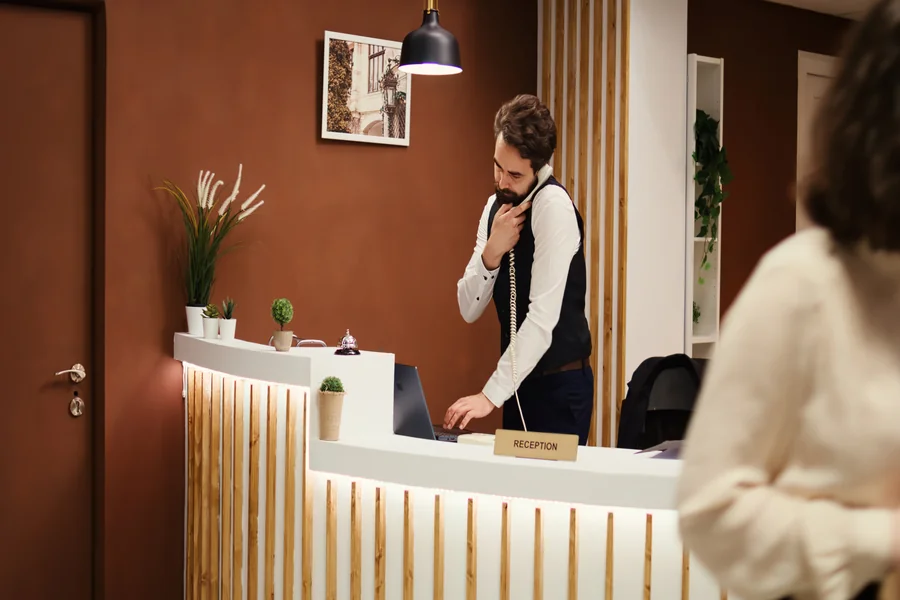
Entering an office in which the reception desk does not fit in with the surrounding area immediately creates a sense of imbalance. It is possible that you already have a well-designed office; however, the reception desk usually turns out to be an addition.
Such a disparity may influence your first impression, making your office less professional-looking than it might seem otherwise. Of course, redoing the whole interior design does not always seem realistic or cost-effective.
Nevertheless, there are many other options through which it becomes possible to create the desired style. Styling the reception desk in your office helps bring harmony to the overall design.
Through careful planning and the use of appropriate techniques, you can achieve both visual balance and the highlight of the reception desk, among other things.
Beyond the physical structure of the desk itself, the surrounding environment must provide a cohesive visual narrative that reinforces a company’s professional standards. Integrating varied textures, such as stone or high-pressure laminates, allows for a sophisticated interplay of light and shadow that enhances the overall depth of the room. As business owners Discover more about the subtle ways spatial planning influences visitor behavior, it becomes clear that even small adjustments to lighting or material selection can drastically alter a client’s perception. Maintaining this balance between aesthetic appeal and operational efficiency ensures that the lobby remains a functional asset. By prioritizing these nuanced design details, a workspace can successfully project a sense of enduring quality and competence.
Let us take a closer look at how to do so.
Color Palette Alignment with Existing Decor
To begin with, analyze the current color scheme of your office. A modern reception desk must blend smoothly with the existing interior. In case the color scheme is a neutral one, then select a desk that fits the color scheme, which can be gray, white, or wooden.
Alternatively, when your workspace uses accent colors, then make use of them in a nuanced manner through the trim of the desk, the panels of the desk, and through ornaments. By doing so, you can establish a cohesive look without creating a visual imbalance.
Material Consistency Across Furniture Pieces
Material selection is significant when developing a unified office setting, particularly within the reception zone. If the desk material resembles other furniture components in the office, everything appears more organized and integrated. This selection of materials helps eliminate any fragmented look in the design of the office, which may interfere with the perfect office design.
For instance, if your office consists of wood, metal, or glass finishes, your reception desk must feature similar components. However, it is also possible to incorporate additional materials without compromising the unity in the design. The key here is striking a balance between harmony and difference.
Lighting Integration For Visual Balance
The perception of the modern reception desk is also highly dependent on lighting, thus making it an essential component in the overall styling process. Even though a reception desk may have a beautiful design, if the lighting is inadequate, it makes it difficult for people to appreciate its appearance.
In order to achieve harmony, it’s necessary to incorporate both ambient and direct lighting. The soft overhead lights act as a source of brightness, and accent lighting can be applied to emphasize some design elements. Secondly, they have LED strips that might bring a bit of modernity without overwhelming the space. With careful lighting planning, it is possible to achieve both functionality and elegance.
Decor Elements That Reflect Brand Identity
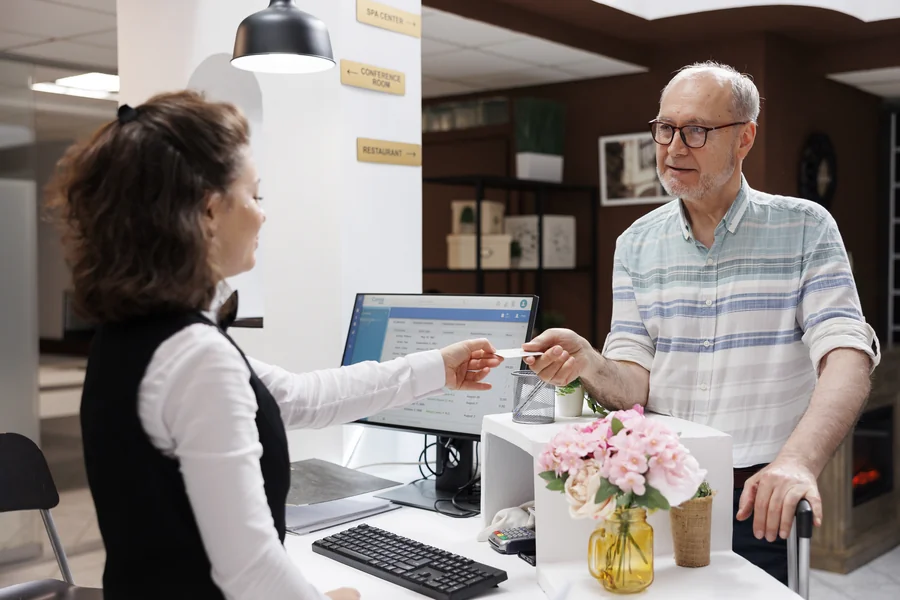
The first point of interaction is usually your reception desk, hence it should reflect your brand image. Rather than cluttering the space, consider a limited number of intentionally chosen decorative pieces that are related to your office theme and overall sense of design. This ensures the desk serves a purpose and is not merely decorative.
You may add a small logo feature, a statement piece, or plants that match your color scheme. Meanwhile, remember to keep proportions to make the desk surface not too heavy or cluttered. These details, when carefully considered, provide a powerful visual identity for your brand in the physical space.
Storage Solutions That Maintain a Clean Look
Even a well-structured modern reecption desk can be diminished in a short time by clutter; this is why correct storage is needed. The use of built-in drawers, hidden cabinets, and cable management makes it easy to keep the day-to-day necessities out of view and yet within reach. This enables the desk to have a clean and orderly look throughout the day.
Secondly, you might want to divide storage by function in order to have dedicated areas for documents, devices, and supplies. Not only does this enhance efficiency, but it also minimizes visual distractions. Consequently, the reception area is more professional and creates a greater impression on visitors, and facilitates smooth day-to-day activities.
Spatial Placement for Seamless Flow
Placement of the reception desk plays a key role in how visitors experience your office. A well-positioned desk should feel intuitive, guiding guests naturally as they enter without causing confusion or blocking movement. Therefore, it is important to consider entry points, walking paths, and available space before finalizing placement.
You should also pay attention to sightlines so the desk is easily visible without overwhelming the layout. Keeping enough open space around it ensures comfort and accessibility for both staff and visitors. When placement is planned carefully, it enhances flow, improves functionality, and creates a welcoming environment that feels both organized and thoughtfully designed.
Conclusion
Styling a modern reception desk to match your existing office decor requires thoughtful attention to detail rather than major changes. When you align colors, materials, and lighting, the desk becomes an integral part of the workspace instead of a separate element.
At the same time, incorporating subtle decor and maintaining organization ensures that the area remains both functional and visually appealing. Placement further enhances the overall flow, creating a welcoming and professional environment.
By applying these practical strategies, you can transform your reception area into a cohesive and polished space that leaves a lasting impression on every visitor.
