

What Is Cellular Technology is a query that is likely to be asked in an era where the majority of people have smartphones and wireless gadgets. All of the call texts and mobile internet use this system. However, lots of individuals are users of it without awareness of its operation. The basis of communication in the contemporary world is cellular technology. It interrelates devices by intercellular networks that transmit signals through large distances. The given guide describes the concept in a comprehensible human manner to ensure that anyone can grasp its intent and effect.
In a nutshell, what is cellular technology?
The answer to What Is Cellular Technology can be simply answered. It is a means of transmitting voice and data in form of radio signals over a large number of small coverage areas known as cells. The base stations or towers serve each cell. The connection of the phone to the closest cell is when you move. The network controls this connection such that you remain connected without realizing the change.
Rather than having one strong transmitter that serves an entire city the area is subdivided into numerous smaller areas. This enables additional customers to be connected simultaneously. It also enhances the quality of signals. In case one cell is busy, this load can be distributed to other nearby cells. This architecture renders cellular systems to be flexible and efficient.
The phone communicates to the closest tower via radio waves. That tower is connected to the greater network. Thence your data or call goes to another phone or server. The action takes place within a few seconds. In the majority of cases it is immediate.
Cellular network construction.
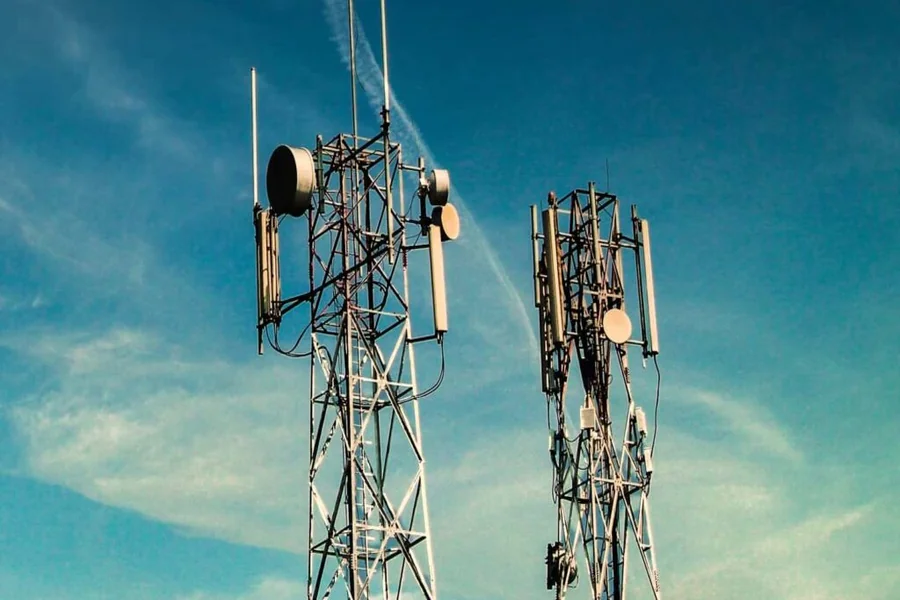
A cellular network consists of numerous components in combination. The cell tower is the most conspicuous component. The towers have antennas, which transmit and receive signals. They are put in a position that they cover neighborhoods towns and highways. They do not have large gaps between their range.
There is also a core network behind the scenes. This deals with the security of call routing and billing. It determines to whom to forward your information. It keeps track of devices. It takes care of handoffs when leaving one cell to the other.
Backhaul links are also present. These are the connect towers connecting to the core network. They can utilize fiber cables microwave connections or other high speed connections. In the absence of backhaul the tower would have no route to pass information on.
These elements form a web together. Your device is one node. Towers are access points. The core is the brain. It is a structure that enables millions of devices to be connected simultaneously.
The reason why cells are employed rather than a single large transmitter.
All the problems are solved by the cell idea. The heavy interference would occur in case a single giant transmitter was used to cover a whole region. The number of the devices would be competing over the same signal. Power demands would be high. Coverage would be uneven.
The smaller the areas covered by towers by partitioning areas into cells. Reusing of signals is possible in other cells. This recycling enlarges capacity. A larger number of individuals are capable of talking or browsing simultaneously. The quality is enhanced by the fact that the devices are closer to towers.
Expansion is also made easier in cells. New towers can be added as a city gets larger. Smaller cells may be constructed within the busy areas when the demand is higher. This maintains service with no redesign of the entire network.
This is why the cellular technology scales well. It may act upon rural roads and even overcrowded stadiums.
Formation of earlier systems up to the present.
Cellular technology was not manifested in its entirety. Initial systems were voice based. They used analog signals. Quality was limited. Security was low. Capacity was small.
Digital systems followed. They enabled more distinct calls and simple text messages. They brought about superior encryption. They were in favor of early data services.
Future generations introduced quicker information. The use of the internet became viable. Photos music and video transversed networks. Smartphones increased in that they could be supported by the networks.
State-of-the-art systems provide high speed connections nowadays. They allow real time navigation and streaming of cloud applications. Speed reliability and efficiency were made better with each generation. The main concept of cells had been preserved. It was only the technology in them that developed.
The present applications of cellular technology.
There is more than cell phone technology. It supplies power to tablets watches and laptops that have radios inbuilt. It links cars with maps and emergency. It interconnects agricultural and industrial sensors.
Smart cities are based on cellular network lighting and monitoring of traffic systems. It is used to transmit patient data with the help of health devices. It is utilized in retail systems in terms of mobile payment and inventory tools.
Cellular routers are used in most houses even in areas that lack cables and supply internet. Cellular connections to schools clinics and families are made in remote areas.
Due to the use of radio waves cellular technology can be used in locations where the wires are expensive. This is essential towards inclusion and expansion.
The connection and maintenance of phone connection.
As soon as you switch on a phone it scans around it. It hearkens to indicators that declare a network. Having identified one it makes a request. The network identifies and provides access.
As you adjust the signal strength varies. The network monitors this. A handoff is prepared when another cell increases in strength. It transfers your attachment to the new cell. And in most instances this occurs without the need to drop the call.
The same happens with data sessions. The packets pass across the network. If you move the path updates. The process is fast. You rarely notice it.
This is a smooth flow that is an accomplishment of cellular design. It is mobile and keeps sessions active.
Advantages and restrictions of cellular technology.
The cellular technology is free. You are able to chat on the move. Information is available at almost any place. The networks can be constructed within a shorter time compared to wired. They adapt to demand.
There are also limits. Signals become weak with distance and impediments. Quality can be impacted by building hills and weather. Traffic jams may reduce the speed in high traffic regions.
Power is another factor. Towers need electricity. Devices need battery life. Engineers are always involved in ensuring efficiency and coverage.
Comprehension of one and another assists in expectations. Cellular technology is effective though flawed. It becomes better with the emergence of new approaches.
What the future may bring
The future of cellular technology is to have increased speed less delay and extended scope. Smaller cells are used in new designs. They install the antennas on houses and street lamps. This brings services near to the users.
Massive numbers of devices are also meant to be supported by networks. This is significant to smart homes and industry. Services such as remote control and health monitoring are concerned with reliability.
With the development of systems, the main concept of cells will persist. They will merely grow intelligent and more adaptive. The idea is to establish the connection that is easy to make and available at all times.
Final Thought
What Is Cellular Technology can be seen in a different light when you view it as a system consisting of many tiny cells. The phone life is the invisible structure. It transmits daily communication in the form of calls to streaming to devices that are connected to it. It has a flexible mobility in design. It is through this technology that we get to know better the network which connects people globally at all times.
FAQs About What Is Cellular Technology
What is cellular technology in simple words?
It is a wireless system that uses many small coverage areas to connect devices through radio signals.
Why is it called cellular?
Because the network is divided into small cells each served by a base station.
Do only phones use cellular technology?
No. Many devices like tablets cars and sensors also use it.
How does a phone choose a tower?
It connects to the tower with the strongest suitable signal.
What happens when I move while on a call?
The network hands your connection to a new cell without interruption.
Is cellular technology the same as internet service?
It can provide internet access but it also supports voice and messaging.
Why does signal sometimes drop?
Distance obstacles and network load can weaken connections.
Can cellular networks work in rural areas?
Yes. Towers can cover wide spaces though speeds may vary.
How is cellular technology different from Wi Fi?
Cellular uses wide area networks run by carriers while Wi Fi uses local routers.
Will cellular technology replace all wired networks?
It will complement them but wires still offer stability and very high capacity.
