

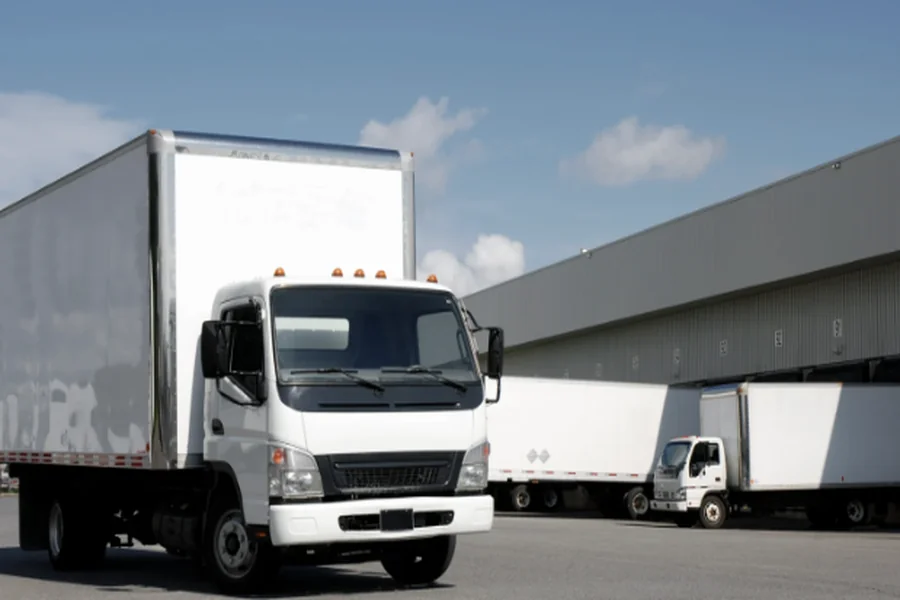
Getting hit by a car driven for personal reasons is one thing. Getting hit by a delivery driver, a work truck, or a company-owned vehicle is a different situation entirely.
When a business is behind the accident, the claim becomes more complicated. There are more insurance policies involved. There are more parties with legal exposure. And there are more ways a business can try to limit what it pays out, including through contract language most accident victims never see coming.
Knowing how these claims work before you need the information gives you a real advantage.
Why Company Vehicle Accidents Are Different
When a driver causes a crash while working, their employer can share legal responsibility. This is called vicarious liability. The business did not cause the accident directly. But the law treats employers as responsible for harm caused by employees acting within the scope of their job.
That single principle opens the door to a much larger insurance pool than a standard personal auto policy provides. A delivery driver’s personal coverage might cap at $50,000. The company that employs them may carry $1 million or more in commercial liability coverage.
The flip side is that businesses have more legal resources to fight claims than individual drivers do. They have legal departments, claims teams, and contracts written specifically to protect them when accidents happen.
Who Can Be Held Responsible
In a company vehicle accident, responsibility can fall on more than one party at the same time.
The driver carries personal liability if their negligence caused the crash. Speeding, distracted driving, running a red light. Those actions belong to the individual behind the wheel.
The employer can be held responsible if the driver was working at the time of the crash. Employers are also directly liable if they hired a driver with a known history of violations, failed to maintain the vehicle properly, or required schedules that pushed drivers to cut corners on safety.
A third-party contractor may share responsibility if the driver was an independent contractor rather than a direct employee. Courts look at how much control the company exercised over the driver’s work to determine whether the contractor relationship shields the business from liability.
The vehicle manufacturer may carry responsibility if a defect in the vehicle contributed to the crash, such as brake failure or a tire blowout caused by a manufacturing defect.
The Insurance Layers That Apply
Commercial vehicle accidents involve multiple insurance policies that apply in a specific order.
The at-fault driver’s personal auto policy typically applies first. Commercial vehicle policies maintained by the employer apply next. Umbrella policies that extend coverage above primary limits may also apply in serious injury cases.
Delivery platforms, rideshare companies, and freight brokers often add another layer. These companies maintain contingent liability policies that activate under specific conditions, such as when a driver is actively carrying a delivery at the time of the crash.
Identifying every applicable policy and its limits is one of the first jobs in a commercial vehicle accident claim. Missing a policy means leaving money on the table before negotiations even begin.
What Businesses Do to Limit What They Pay
This is where accident victims often get blindsided.
Businesses that operate vehicle fleets or use contractors for delivery and transportation frequently include contract language designed to cap or control their financial exposure when accidents happen.
One tool they use is a preset damage limit written into commercial contracts. When a company vehicle is involved in a crash, and the business is held liable, they may point to contract language that specifies a fixed maximum payment regardless of the actual harm caused. These preset payment limits are what courts and attorneys refer to as liquidated damages provisions. Texas residents dealing with legal questions after an accident can find general information through firms like Sutliff & Stout, which publishes free legal resources on their website.
The enforceability question matters enormously in catastrophic injury cases. A spinal cord injury can cost millions in lifetime care. A contract clause that caps recovery at $100,000 represents a devastating outcome for a victim who did not know that limitation existed or that it could be challenged.
What Evidence Matters Most After a Company Vehicle Accident
The evidence in a commercial vehicle accident goes well beyond the standard crash documentation. These additional items are specific to company vehicle cases and can make or break a claim.
Driver logs and scheduling records. If the driver was fatigued or operating outside permitted driving hours, those records establish employer negligence directly.
Vehicle maintenance history. Companies are required to maintain regular inspection and service records on commercial vehicles. Gaps in those records, or evidence of deferred repairs, become evidence of negligence when a mechanical issue contributed to the crash.
GPS and telematics data. Most commercial fleets track vehicle location, speed, and driving behavior in real time. That data can confirm the driver’s speed at the moment of impact, their route, and whether they made emergency stops or corrections before the crash.
The driver’s employment file. Prior violations, accident history, and whether the driver was properly licensed and medically qualified to operate a commercial vehicle are all part of the employer’s hiring and retention record.
The commercial contract between the employer and driver. If the driver was a contractor rather than a direct employee, the contract language determines how much control the business exercised, which affects whether the company can be held directly liable.
Evidence in commercial vehicle cases disappears faster than in personal auto cases. Companies overwrite GPS data on regular cycles. Maintenance logs are kept for defined retention periods. Acting quickly to preserve evidence through formal legal requests is critical.
Steps to Take Immediately After a Company Vehicle Crash
The first hours after a commercial vehicle accident shape everything that follows.
- Get medical attention the same day, even if symptoms feel minor. Delayed injuries are common after vehicle impacts, and a gap in care weakens both your health outcome and your legal claim.
- Document the company information from the vehicle. The business name, vehicle number, DOT number if visible, and any branding on the truck or van identify the employer and the commercial policy that covers the vehicle.
- Photograph the scene from multiple angles before any vehicles are moved. Include the vehicle positions, road conditions, traffic signals, skid marks, and any visible damage.
- Collect witness contact information before people leave the scene. Commercial vehicle crashes often happen on busy roads where bystanders have clear sightlines.
- Do not give a recorded statement to the company’s insurance adjuster before speaking with an attorney. Commercial insurers assign claims handlers immediately after serious accidents. Their job is to protect the company. Your recorded words become part of that process.
- Preserve your own records. Keep every medical bill, prescription, therapy receipt, and documentation of missed work in a single folder from the first day.
How Texas Law Treats Commercial Vehicle Accident Claims
Texas follows a modified comparative fault rule. Each party involved in a crash is assigned a percentage of fault based on their actions. You can recover damages as long as your share of fault is below 51 percent.
Texas also allows recovery for both economic and non-economic damages. Economic damages cover measurable financial losses: medical bills, lost income, future care costs, and property damage. Non-economic damages cover pain and suffering, emotional distress, and loss of enjoyment of life. Texas does not cap non-economic damages in personal injury cases the way some other states do.
In cases involving gross negligence, meaning conduct so reckless that it shows a deliberate disregard for the safety of others. In those cases, Texas law also allows punitive damages. For commercial vehicle cases where an employer knowingly put an unqualified driver behind the wheel, that threshold is sometimes reachable.
Why Commercial Vehicle Claims Require Different Legal Handling
A standard car accident claim usually involves two drivers and their insurance companies.
A commercial vehicle accident is much more complicated.
Instead of dealing with one company, you may be dealing with a trucking company, an employer, a staffing agency, a reefer trailer rental company, a commercial insurance carrier, and sometimes even a vehicle or parts manufacturer.
Each party has its own legal team. Each has its own financial interest in reducing what gets paid out.
Those companies often start protecting themselves immediately after the crash is reported. Meanwhile, the injured victim is usually the only person without legal representation in the early stages of the case.
That imbalance matters.
The difference between what an unrepresented victim accepts and what a fully investigated commercial vehicle claim may actually be worth can be significant. Companies often try to settle quickly and for as little as possible.
Strong investigation, fast evidence preservation, and understanding how commercial liability works can completely change the outcome of the case.
