

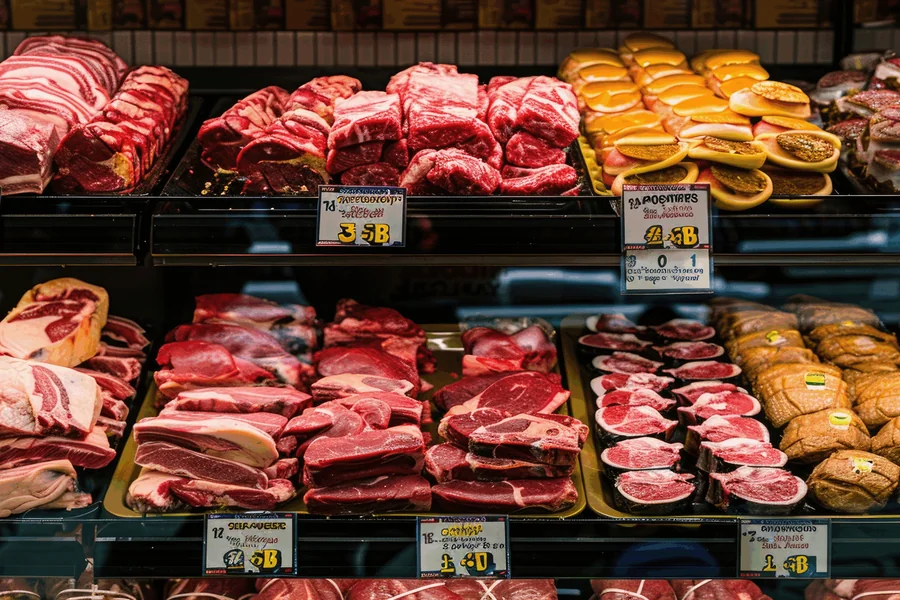
Of all the categories that have moved online over the last decade, meat is the one that took the longest to follow, and it has now started catching up faster than most people expected. The reasons are practical, not ideological. Households are not boycotting their local butchers. They are simply running out of time, running into inconsistent supermarket quality, and increasingly noticing that the meat section is one of the most uncomfortable parts of a typical weekly shop.
Problems With Traditional Supermarket Meat Shopping
Anyone who has tried to plan a weeks worth of meals around the supermarket meat counter knows the friction. The cuts available on a Tuesday are different from the cuts available on a Friday. The portion sizes are calibrated for households of four when the actual household is two or one. The packaging is wasteful. The freshness windows are short, which means a household either eats meat the day it is bought or commits to freezing it and losing some quality. The shop is built for high-throughput convenience, not for cooking thoughtfully through a week.
How Meat Delivery Services Solve These Issues
A specialist meat grocery delivery service resolves several of these frictions simultaneously. Cuts arrive vacuum-sealed in portion sizes the household actually uses. Quality is consistent because the supplier has direct relationships with farms and processors rather than rotating through whichever wholesale market had the best price that week. The freshness window starts the day the delivery is packed rather than the day it landed in the supermarket display, which on cold-chain logistics typically adds two to four usable days at home. None of this is dramatic. All of it is meaningful when stacked across a year of cooking.
Food Safety and Cold Chain Standards
The food-safety angle deserves its own paragraph. The USDA Food Safety and Inspection Service sets clear standards for meat handling, temperature control and cold-chain integrity, and specialist online providers operate inside those standards more reliably than most consumers realise. Vacuum-sealed packaging, temperature-monitored shipping, and shorter handling chains mean fewer cross-contamination opportunities than the typical supermarket display, where multiple shoppers handle the same case, where surface temperatures fluctuate at peak hours, and where re-stocking schedules are not always perfectly synchronised.
Cost and Waste Reduction Benefits
There is also a price story that does not get told often enough. Households assume specialist meat delivery costs more than supermarket meat. The honest answer is that it costs more per kilogram on basic cuts and roughly the same or less on premium cuts, and the household-level cost is usually flat to lower because portion control eliminates the silent waste that supermarket overbuying generates. Most households throw out more meat than they realise. A delivery service that ships precisely what was ordered, in correctly sized portions, eliminates most of that loss.
How Cooking Habits Change
The cooking experience changes as well, although this part is harder to quantify. People who switch to specialist meat delivery report that they cook more deliberately, plan meals further ahead, and treat each cut with more attention because the cut was selected rather than grabbed. That shift, repeated over a year, produces noticeable improvements in both household food culture and household nutrition, neither of which were the original reasons for switching but both of which become reasons to stay.
The Future of Meat Shopping
For a sector that built itself around convenience, the meat aisle has been quietly losing the convenience argument for years. The doorstep-delivered alternative is finally meeting the bar that the supermarket has stopped reliably clearing.
FAQ
Is the meat delivered fresh or frozen?
Most specialist services ship in temperature-controlled packaging that arrives chilled and is suitable for either immediate cooking or freezing on receipt.
Can a household choose specific cuts?
Yes. Modern services offer customisable boxes and ad-hoc orders alongside subscription baselines.
Is online meat more expensive than supermarket meat?
On a per-kilogram basis sometimes yes, although household-level cost often equals or improves due to reduced waste.
How is cold-chain integrity maintained during delivery?
Insulated packaging, gel coolants and timed delivery windows are standard. Most providers guarantee internal temperature at point of arrival.
