

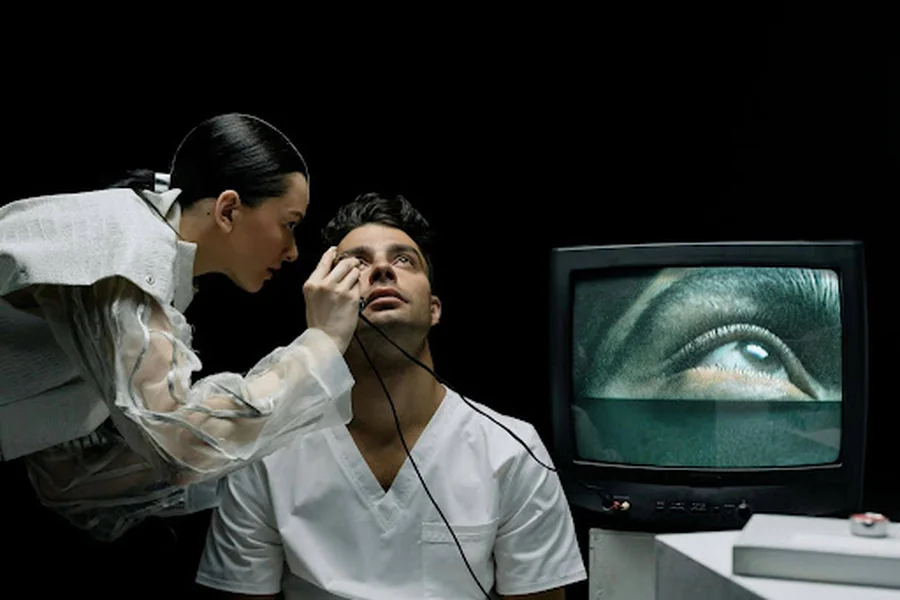
The modern workday no longer ends when we walk out of an office. For the remote worker, the dedicated gamer, and the digital native, life is a seamless transition from one glowing rectangle to another. We move from the laptop to the smartphone, then to the tablet or the television, often clocking in more than eight or ten hours of screen time daily. While we have become accustomed to the accompanying dry eyes, late-afternoon headaches, and the peculiar mental exhaustion known as “brain fog,” we rarely stop to ask what is happening at a biological level.
For years, the primary solution offered to the digital generation was a pair of amber-tinted blue light glasses. While these may offer a superficial layer of comfort by filtering out specific wavelengths of light, they do little to address the deeper physiological exhaustion occurring within our cells. To truly protect our longevity and performance in a digitized environment, we must look past the external filters and focus on the internal mechanics of the eye. Utilizing a high-quality eye health supplement for vision and screen-time support can provide the necessary foundation for cellular resilience against the modern world. This shift from external blocking to internal fortification represents the next frontier in ocular wellness.
The Digital Siege: More Than Just Light
To understand why traditional solutions fall short, we must understand the specific type of stress screens place on the human body. The eye is one of the most metabolically active organs in the body. It requires a massive amount of energy to process visual information, and this energy is produced by mitochondria, the power plants of our cells.
When we stare at digital devices, our eyes are bombarded with High-Energy Visible (HEV) light, commonly known as blue light. Unlike natural sunlight, which is balanced across a full spectrum, digital screens emit a concentrated spike of blue light. This light penetrates deep into the eye, reaching the retina and the macula. Once there, it triggers the production of free radicals—unstable molecules that cause oxidative stress.
In a natural environment, the eye’s internal antioxidant systems can neutralize these molecules. However, the sheer volume of screen time in the modern world creates an “oxidative debt.” The mitochondria in our ocular cells become overworked and damaged, leading to a drop in energy production. This is why your eyes feel “heavy” or “tired” even if you haven’t been physically active; your cells are literally running out of fuel while fighting off microscopic damage.
The Macular Shield: The 5:1 Ratio
Nature has provided the human eye with its own pair of internal “sunglasses” known as the macular pigment. This pigment is composed of two primary carotenoids: Lutein and Zeaxanthin. These nutrients are deposited in the macula, where they act as a filter for blue light and a potent antioxidant defense system.
However, the body cannot produce these carotenoids on its own; they must be obtained through diet or supplementation. Research has consistently shown that for these nutrients to be most effective, they need to exist in a specific 5:1 ratio of Lutein to Zeaxanthin. This specific balance mimics the natural distribution found in healthy human tissue.
When you maintain an optimal 5:1 ratio, the macular pigment becomes denser and more efficient. It acts as a physical barrier, absorbing HEV light before it can reach the delicate photoreceptors of the retina. Furthermore, these carotenoids act as “scavengers,” hunting down the free radicals produced by screen use and neutralizing them before they can damage cellular structures. For the remote worker or gamer, this means better contrast sensitivity, reduced glare disability, and a faster recovery from the “bleached” feeling that comes after staring at a bright spreadsheet or gaming interface for hours.
The Mitochondrial Frontier: MitoQ and Targeted Protection
While Lutein and Zeaxanthin protect the “front lines” by filtering light, there is a deeper level of protection required for the “engine room” of the eye. This is where the role of mitochondria becomes critical. As mentioned, the retina is packed with mitochondria to fuel our vision. When these mitochondria are under constant oxidative stress from digital devices, they begin to leak, and their efficiency drops.
Traditional antioxidants, such as Vitamin C or standard CoQ10, often struggle to enter the mitochondria in significant quantities. They circulate in the bloodstream or stay in the fluid around the cell, but they cannot easily penetrate the double-membrane of the mitochondrial wall. This is a significant limitation because the damage is happening inside the mitochondria themselves.
This is where MitoQ represents a breakthrough in ocular science. MitoQ is a shortened, positively charged version of CoQ10. Because mitochondria carry a negative charge, the MitoQ molecule is actively drawn into the mitochondria like a magnet. Once inside, it neutralizes free radicals at the very source of their production. By protecting the mitochondria within the eye, we ensure that the cells have the energy they need to repair themselves and maintain peak function. This targeted approach helps alleviate the “brain fog” and “mental fatigue” that often follow a long day of digital consumption, as the visual system is no longer draining the body’s total energy reserves just to stay functional.
Synergy: The Ultimate Digital Defense
The combination of the 5:1 Lutein/Zeaxanthin ratio and mitochondria-targeted antioxidants creates a comprehensive defense strategy. It is a two-pronged approach:
- The Outer Defense: The carotenoids thicken the macular pigment, filtering out the harmful blue light before it causes damage.
- The Inner Defense: MitoQ stabilizes the energy-producing centers of the ocular cells, ensuring they remain resilient and capable of handling the metabolic demands of constant visual processing.
For digital natives, this synergy is game-changing. It moves the conversation away from “screen time reduction”—which is often impossible in the modern economy—and toward “screen time resilience.” Instead of simply trying to hide from the light, we are equipping our bodies to handle it.
Practical Steps for the Digital Native
While cellular support is the foundation, it should be part of a holistic approach to eye health. If you are spending the majority of your day in front of a screen, consider the following habits:
- The 20-20-20 Rule: Every 20 minutes, look at something 20 feet away for at least 20 seconds. This allows the ciliary muscles in the eye to relax and resets your focus.
- Blink Consciously: When we look at screens, our blink rate drops by up to 60 percent. This leads to the “dry eye” sensation. Making a conscious effort to blink fully and frequently keeps the ocular surface lubricated.
- Optimize Your Environment: Ensure your screen brightness matches the ambient light of your room. A bright screen in a dark room creates excessive contrast that forces the eye to work harder.
- Deep Nutrition: In addition to targeted supplements, focus on a diet rich in leafy greens, eggs, and colorful peppers to provide a baseline of essential phytonutrients.
Conclusion
We are living through a grand biological experiment. Never before in human history have our eyes been required to process such a high volume of artificial, high-energy light for such extended periods. The symptoms we feel—the fatigue, the dryness, the lack of focus—are not just inconveniences; they are signals from our cells that the oxidative load is too high.
Blue light glasses may be a stylish accessory, but they are a superficial fix for a cellular problem. By focusing on the 5:1 ratio of Lutein and Zeaxanthin to bolster our macular pigment and utilizing mitochondria-targeted antioxidants like MitoQ to protect our cellular power plants, we can thrive in a screen-heavy world. It is time to go beyond the surface and give our eyes the deep, molecular support they need to keep up with our digital lives.
